14 min read
GTA VI x Spotify: When the Soundtrack Becomes the Marketing
Spotify’s GTA VI billboards show how Rockstar is turning music into a pre-launch marketing channel. Here’s why the strategy works.
GTA VI x Spotify: When the Soundtrack Becomes the Marketing
GTA VI isn't out yet.
Its music campaign already is.
In September, artists including Travis Scott, Morgan Wallen, Future, Metro Boomin, PinkPantheress, and Keith Richards began posting GTA VI-style artwork across social media.
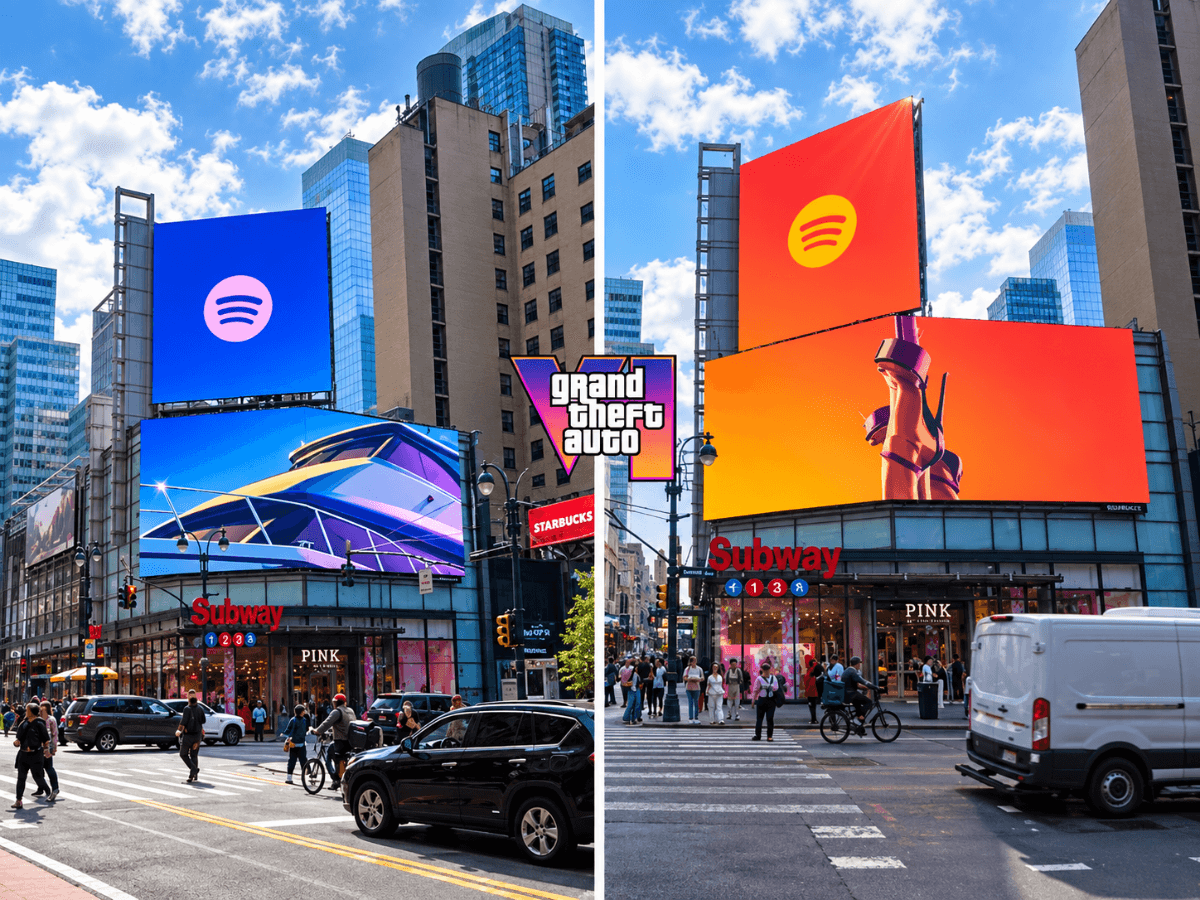
A day later, the same visual world appeared on Spotify-branded billboards in New York, Los Angeles, and Miami. Spotify initially explained almost nothing. Just GTA imagery, its logo, and enough mystery to get people talking.
Then Rockstar revealed what much of the campaign was leading toward: Grand Theft Auto VI: The Album, a 34-track original soundtrack launching alongside the game on November 19. Six tracks are already streaming.
The interesting part isn't simply that GTA has music.
It always has.
The interesting part is that the soundtrack is now part of the launch campaign itself.
The Tease Came Before the Explanation
Most launches work in a predictable order.
Announcement first.
Advertising second.
Rockstar flipped it.
Artists posted cryptic GTA artwork. Spotify carried those visuals into physical media. Fans speculated. Gaming publications covered it. Only then did the album announcement arrive.
That sequencing matters.
Instead of saying, “Here's our soundtrack,” the campaign gave people something to decode.
Mystery created conversation before the product needed explaining.
And with a franchise as recognized as Grand Theft Auto, explanation isn't really the marketing problem anyway.
Take-Two CEO Strauss Zelnick recently described the challenge perfectly: the goal is to “take awareness and turn it into excitement.”
That's exactly what this rollout does.
GTA Doesn't Just Use Music. It Moves Music.
Rockstar already has proof that its audience can turn soundtrack choices into streaming events.
When GTA VI's first trailer featured Tom Petty's “Love Is a Long Road,” Spotify streams jumped 36,979% compared with the previous week.
Then Trailer 2 used The Pointer Sisters' “Hot Together.”
Within two hours, Spotify streams reportedly increased 182,000%.
Those numbers change the relationship between artist and game.
A soundtrack is no longer just background music.
A GTA placement can introduce an old song to a new generation, create streaming spikes, produce social content, and give featured artists a reason to promote the game to their own audiences.
Rockstar gets music culture.
Artists get discovery.
Spotify gets listening activity.
Everyone has something to distribute.
The Game Hasn't Launched, but the World Has
This is where Rockstar's strategy gets particularly strong.
GTA VI isn't being marketed as one product arriving on one date.
Its world is being released in pieces.
Trailers introduce characters.
Artwork introduces locations.
Artists introduce music.
Spotify carries the aesthetic into cities.
The album creates something fans can listen to before they ever start the game.
That keeps GTA VI culturally active between major game announcements.
And unlike another trailer, music can become part of someone's daily routine.
A song can sit in a playlist for weeks before launch.
That's powerful pre-release marketing.
GTA V Launched Into a Different Internet
GTA V also had an enormous soundtrack when it launched in 2013.
But the distribution environment was completely different.
TikTok didn't exist.
Short-form creator culture hadn't become the trend engine it is now.
Artists couldn't immediately turn a game placement into thousands of edits, sounds, reactions, and reposts across multiple platforms.
Today, a song doesn't stay inside the game.
It can escape into Spotify, TikTok, Instagram, YouTube, memes, playlists, and creator content almost instantly.
That means Rockstar isn't simply curating the atmosphere of Vice City.
It's potentially creating dozens of pieces of culture that can market the game independently.
One Campaign, Multiple Audiences
The smartest part may be how many communities the rollout touches.
Gaming fans follow Rockstar.
Music fans follow the artists.
Spotify reaches listeners who may not follow gaming news at all.
Billboards create physical visibility.
Social posts create speculation.
Streaming creates repeat exposure.
That is what strong cultural marketing looks like.
Not repeating the same advertisement everywhere.
But giving different audiences different reasons to enter the same campaign.
What Marketers Can Learn
The lesson isn't that every company needs Travis Scott and giant Spotify billboards.
It's that supporting elements of your product can become marketing channels of their own.
A restaurant's playlist can build identity.
A fashion brand's collaborators can become distribution.
A software company's data can become research content.
A physical event can become social media.
Ask a better question:
What around our core product is interesting enough to have its own audience?
Rockstar found one of the strongest possible answers.
Music.
The Soundtrack Is No Longer Background
GTA used to use music to make driving through its world feel better.
Now the music is helping sell the world before players even enter it.
That is the shift.
The soundtrack sets the mood inside the game.
The artists create reach outside it.
Spotify turns listening into another consumer touchpoint.
And the billboard campaign connects the fictional world of GTA VI with the real one.
The soundtrack isn't supporting the marketing anymore.
It's becoming part of the marketing machine.
At Nitroger, we help brands identify the channels, partnerships, and cultural opportunities around their core product that can create attention beyond traditional advertising. Because sometimes your strongest marketing asset isn't the product itself—it's the world you build around it.